Winter Weaving

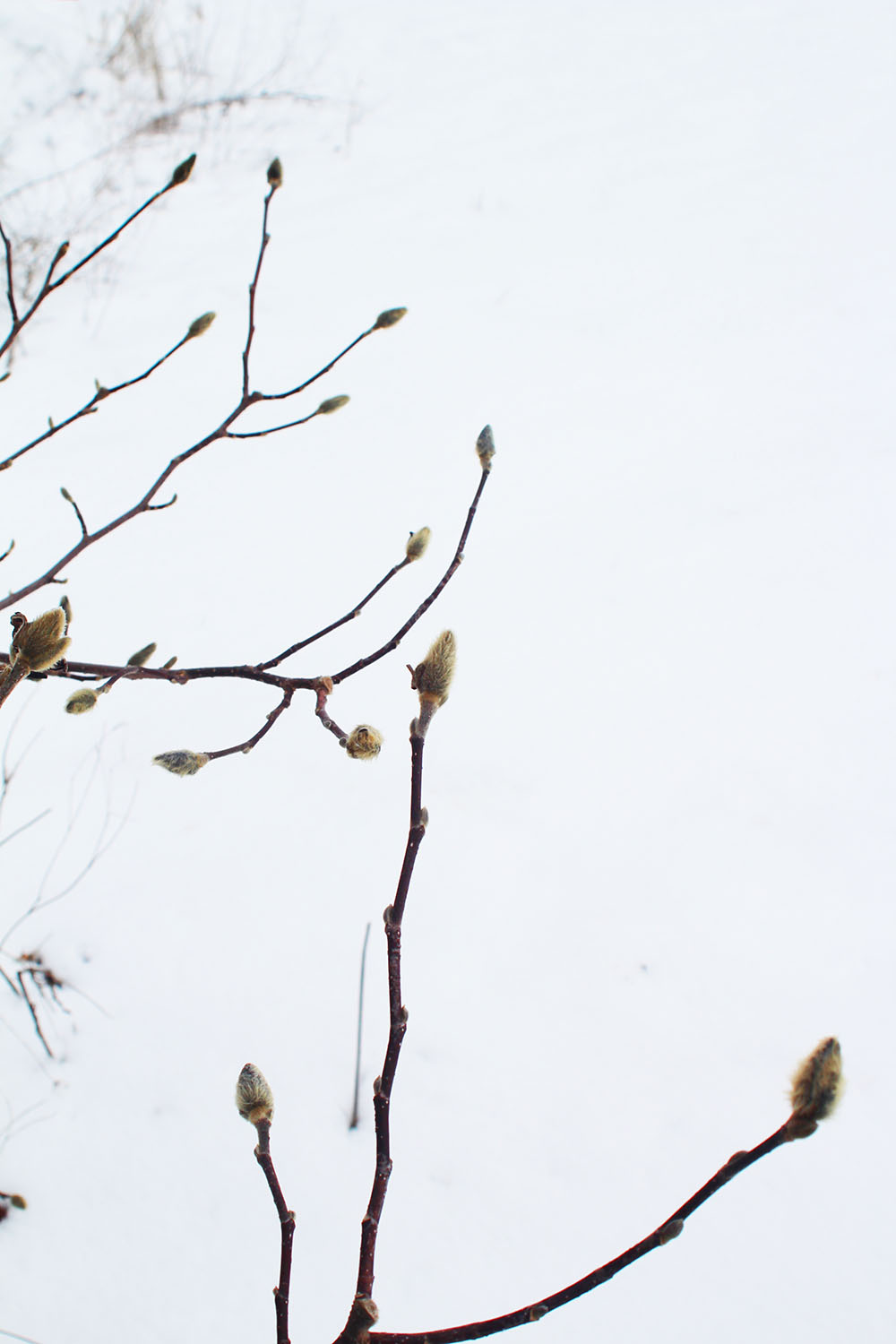
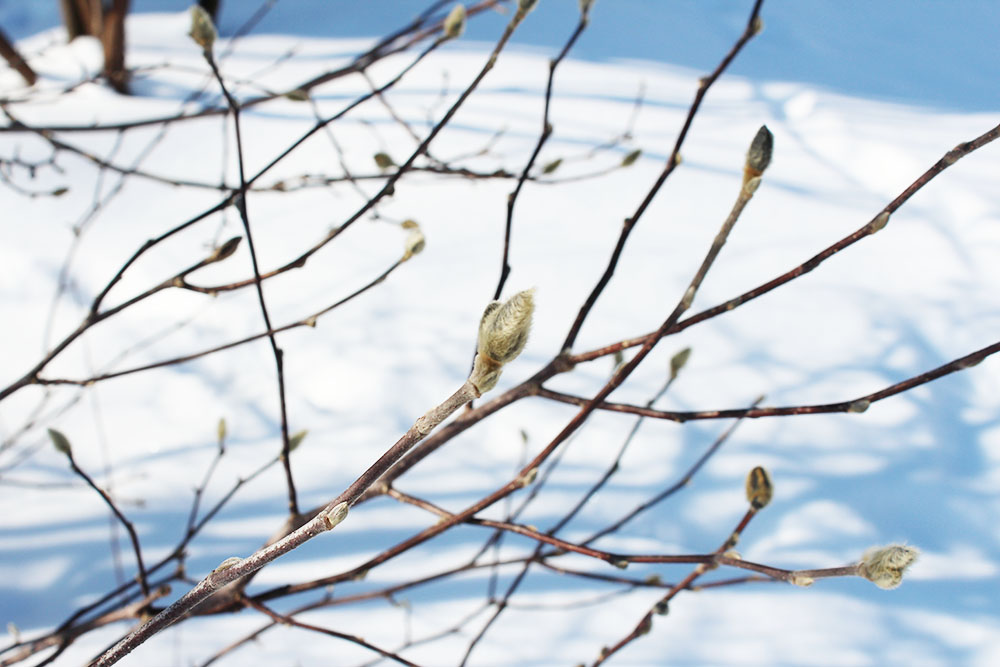
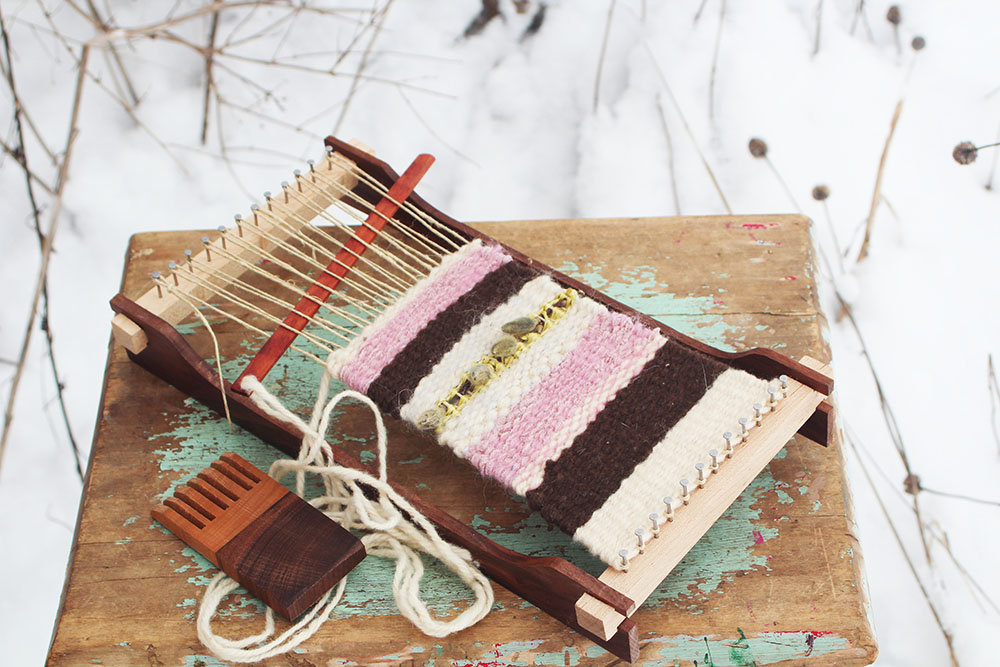
Winter WeavingI did a little winter weaving on my portable loom. It felt good to sit down on a cold, snowy day & play with some of my stash yarns.  This little weaving was inspired by the fresh fallen snow & the Magnolia tree in our backyard.

Winter Pussy Willow

– – – – – – – – – – – – – – – – – – – – – – – – – – – – – – – – – – – – –

This weaving loom can be found in my Etsy shop

Rooster Egg Cozy

I love little vintage treasures!  I enjoy sifting and hunting through old things; and the rush of adrenaline I get when I find that perfect item.    Last week, I was out thrifting in hopes of finding some unique things to add to my children’s Easter baskets when I came across an old hand-knit egg cozy in the shape of a rooster.   I found myself smitten with the quick little knit, and wanted to write a pattern for making more.

Materials

I used some of my stash yarn to create this egg cozy, and have long lost the yarn band to it.

Fingering weight yarn in white & red

One pair of strait knitting needles size US 5 (3.75 mm)

Gauge

6sts x 5 rows = 1″

Pattern

CO 40

2×2 rib pattern for 4 rows

Switch to St st and work 12 rows

BO 13 st, K to the end of the row (27 total st)

BO 13 st, P to the end of the row (27 total st)

K 8 rows

BO

Finishing

Fold in half lengthwise, and using your favorite method,  stitch the sides together.

Using the red yarn, single crochet stitch across the top of the head, and down the outer edge (the roosters face).

Tail

Loop yarn around your hand several times.  Tie at the center to secure the loops, and attach the tail to the rooster.

The cozy will fit any XL sized egg or a plastic Easter egg.

TKGA Master Knitters Level 1: Swatches 4-6

7956973104_a65e1ed837_z

When I first received the program in the mail & started reading through it, I felt overwhelmed & unsure about where & how to begin.  If I hadn’t been working through the program with a friend, I would have struggled & probably wouldn’t have enjoyed it much.  Having someone to talk to about the program, & to work together made a big difference for me. There are questions that my friend & I asked each other, & we scoured the internet together for examples from others who have also worked through the program. I want to be that resource for others.  In this series I will describe what skills a knitter needs to know about & helpful resources that can be used in answering the questions. I will  share pictures of my swatches, & the feedback I receive after my swatches have been reviewed. I hope that this series will be a companion for those working through the program.

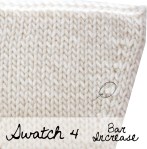
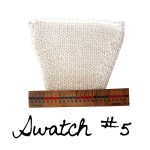
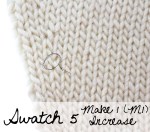
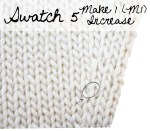
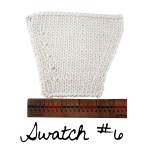
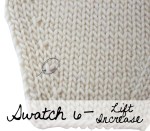
Swatches 4-6 are designed to demonstrate your knowledge of increases.  You will need to know how to increase using bar, lifted/raised, & Make 1 (M1) increases.  Knitty has a great article demonstrating how to make these increases.  You will also need to know how to evenly space increases.

When answering the questions that correspond with these swatches you will find that the following articles are a great resource.

“Evenly Spaced Increases” by Mary Forte. Cast On November 2010-January 2011: 67-69

“Single Increase Savvy” by Binka Schwan. Cast On August-September 2011: 70-71

*These articles are only available to TKGA members.

Snowy Days

pussy willows

We received a large amount of snow this week, & yesterday, the schools were closed.  The kids & I took advantage of the day to go out & play.  The sledding hills were perfect & the weather was great, but there were also hints of spring!

lilac budsAs I looked around, I noticed that our trees are beginning to bud, & the birds have been returning to the area.  I can hear their songs throughout the day bringing cheer to these last days of winter.

This weekend the temperature is suppose to be 20 degrees warmer, so I know the snow won’t stay for long.  I am ok with that.  We got our last romp in the snow, so now Spring may come

TKGA Master Knitters Level 1: Swatches 1-3

7956973104_a65e1ed837_zAt the beginning of 2012, I decided that I wanted to test my knitting skills by enrolling in TKGA’s Masters Program for Hand Knitting.  I recruited a friend to join me & in March we both began.  She has finished the first level & passed.  I, on the other hand, have been dragging my feet to get everything I need completed.  I am about 3/4 of the way through, & I really just need to buckle down & finish it.   Maybe by writing about the program here, I will find the motivation that I need.

When I first received the program in the mail & started reading through it, I felt overwhelmed & unsure about where & how to begin.  If I hadn’t been working through the program with a friend, I would have struggled & probably wouldn’t have enjoyed it much.  Having someone to talk to about the program, & to work together made a big difference for me. There are questions that my friend & I asked each other, & we scoured the internet together for examples from others who have also worked through the program. I want to be that resource for others.  In this series I will describe what skills a knitter needs to know about & helpful resources that can be used in answering the questions. I will  share pictures of my swatches, & the feedback I receive after my swatches have been reviewed. I hope that this series will be a companion for those working through the program.

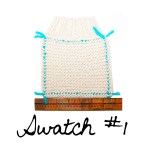
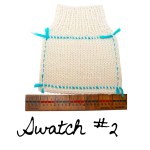
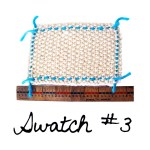
Swatches 1- 3  show that you are familiar with Long Tail Cast On, Garter, Stockinette, Seed Stitch & Ribbing, as well as, binding off in pattern.  You will need to know the difference between the right & wrong sides, be able to determine gauge, maintain consistent tension, & how to correct tensions problems.

*The articles “More Thoughts on Gauge.”  by Binka Schwan, (Cast On May-July 2010: 65-69) & “Tension Problems” by Arenda Holladay, (Cast On Feb-April 2009: 1-3) are 2 helpful resources when answering questions about these first 3 swatches.

*These articles are only available to TKGA members.

Knitting Behind Bars

An article written by Jill Rosen, The Baltimore Sun.

Lynn Zwerling speaks of knitting the way others talk about yoga or long distance running or even particularly potent cocktails. It’s life-changing, she’ll say. Mind-altering. Zen. The Columbia retiree doesn’t care if she’s making a hat, a sweater or a scarf. It’s just the way she loses herself in the lightly clicking needles, plush wool and repetitive motion.

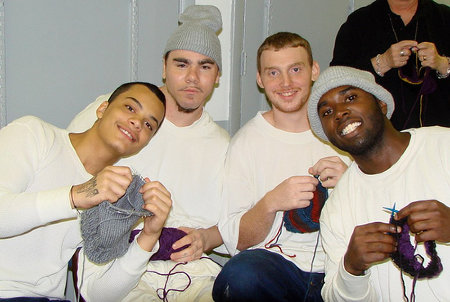
Zwerling, who’s 67, took up knitting after retiring from selling cars, quickly becoming an evangelist, more enthusiastic than skilled. She started a knitting group that swelled to nearly 500 members and then — surprising everyone she knew — announced that she wanted to teach men in jail how to knit.
DSC00037

“I just knew it would work,” she says. “I thought I could give a calming influence to people who really need this. I’m not a social worker. I’m not an educator. But I thought what it takes to do knitting are skills vital to human existence — setting goals, completing a project, giving to somebody else.

“And I thought, maybe when they get back in the world, these men might choose to be calm and do something worthwhile. But I’m a dreamer, you know.”

Defying every expectation, Zwerling’s Thursday night program, Knitting Behind Bars, has become in two years the most exclusive club at Jessup’s Pre-Release Unit, an all-male, minimum-security penitentiary in Howard County.

Men literally beg to get in. There’s a waiting list. And no one’s more surprised about that than the assistant warden who couldn’t help but harrumph when Zwerling told her she wanted to teach inmates how to make stuffed dolls and woolly hats. Every other prison in the area had already turned her down.

“I was like, ‘Mmmm, I don’t know,” says Margaret M. Chippendale, the prison’s warden. “I just had a hard time trying to grasp that an inmate that might have committed a violent crime or been a gang affiliate was going to want to sit in a room and knit.”

But they did. And do.

They want it so much, in fact, that they’re willing to be good in order to do it. Chippendale has noticed lower rates of violence among the men who knit. “It’s a privilege to be in that program,” Chippendale says. “It’s something that matters and they don’t want to do anything to be removed from it.”

On a recent Thursday, George Hopkins hunched in a chair, grimacing in concentration, pushing a needle through a loop of wool, wrapping it with yarn, then deftly tucking it under, through and around — again and again, over and over.

The 54-year-old from Baltimore, in prison for stabbing someone, had settled into a knitting-induced reverie. He was halfway into a hat and, just as Zwerling suspected, entirely transported.

“My mind is on something soft and gentle,” he said. “My mind is nowhere near inside these walls.”

That first night at the prison, Zwerling went alone. A grandmotherly figure who cuts her graying hair short and who likes to wear her own brightly colored creations, Zwerling stepped through the metal detector, held her arms out for a pat down and endured disapproval over her underwire brassiere. She says she wasn’t scared, not even for a minute.

“We were very naive,” says Sheila Rovelstad, a 61-year-old avid knitter who joined Zwerling at the jail not long after that first class. “At first we didn’t know enough to be afraid.”

They thought the guys were fundamentally good fellows who perhaps made “some bad choices.” But soon enough they realized that these were men who had beaten people, written bad checks for thousands of dollars, and in one case, kept someone locked in a room. One was a child abuser. “That one was hard,” Rovelstad says.

“They are criminals,” she says. “Most have hurt someone in some way. These are not good boys. But we’ve become fond of them.”

Both women will tell you they know boys. They raised their own. Zwerling’s sons are 31 and 34. Rovelstad’s son died in 1999 in an accident while he was attending Florida State University.

“We understand how easy it is go astray. It isn’t that we had bad boys,” Zwerling says. “But we had boys.”

In the bare, plain classroom that’s become the knitting room at the prison, the women lay down firm ground rules. No roughhousing. No coarse language. No prison nicknames. “Bring your best selves,” they say.

If one of the men steps out of line, Rovelstad finds herself telling him, “We don’t do that in this family.” It’s the same thing she’d tell her own kids.

For the sessions that run two hours every Thursday evening, the men do seem to bring their best selves. They shower. They put on clean clothes. When they walk in, they peel off their skull caps and greet the women respectfully. Before they leave, they’ll call out things like, “Drive safely” and “Have a great week.”

During an inmate’s first class, Zwerling, Rovelstad and a third volunteer will help him make a little swatch — nothing more than a few stitches worked back and forth. But before that new knitter leaves, the women will have him cut the yarn, taking care to leave a long tail. They’ll tell him to carry the square in his pocket and if he gets upset, to pull the tail.

That first class wasn’t easy for Raymond Furman, a 46-year-old from Washington who’s serving a sentence for telephone misuse and stalking. Frustrated and unable to do more than a stitch or two without a mistake, he threw down his work and said, “I can’t do this.” But, he remembers, one of the women said, “Just relax. Let the yarn have its way.”

Beans for Brains

postcardjimmy beans wool has created a scholarship program for knitters/crocheters/sewers! The application to apply will be posted to their website on March 1. Applications will only be accepted through March 31, so don’t delay your entry.

I am so excited about this opportunity.  I never finished school, but have often thought about going back. It’s always the expense that keeps me from pursuing a higher education. This is something that I definitely will be pursuing in the future.  Maybe next year I’ll be ready.