Winter Weaving

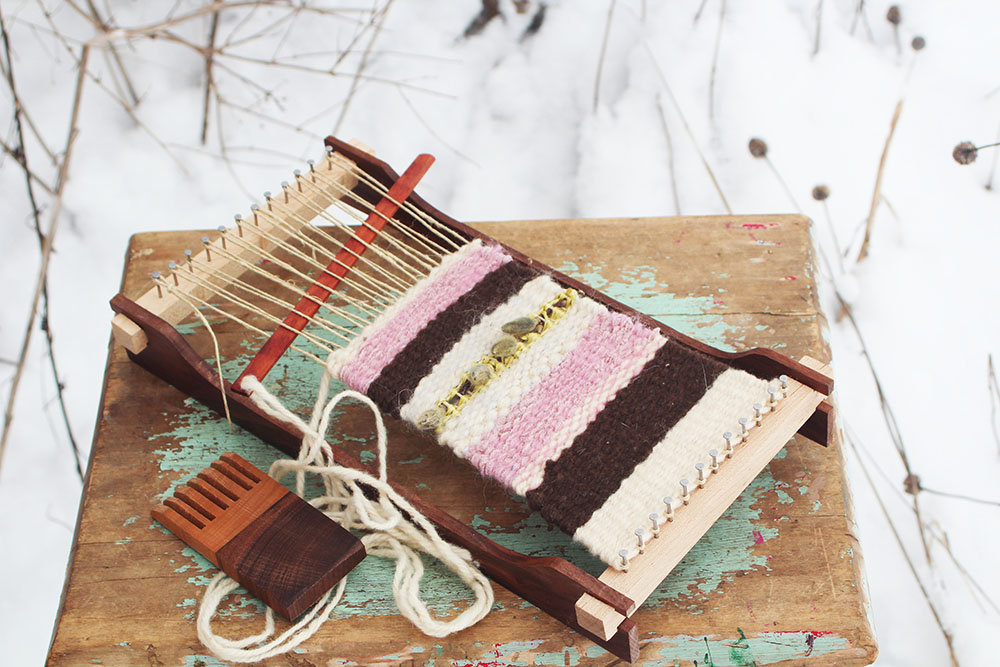
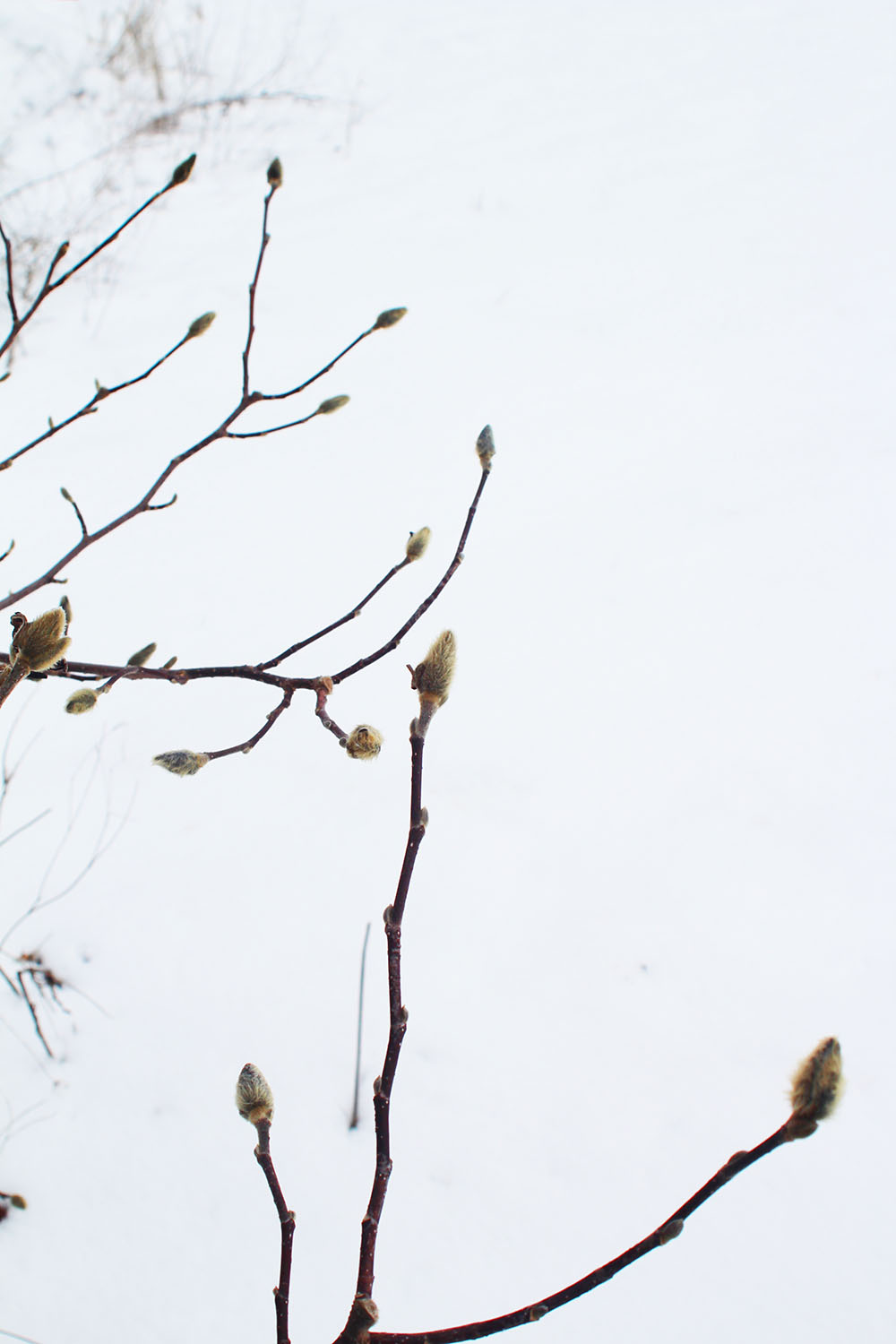
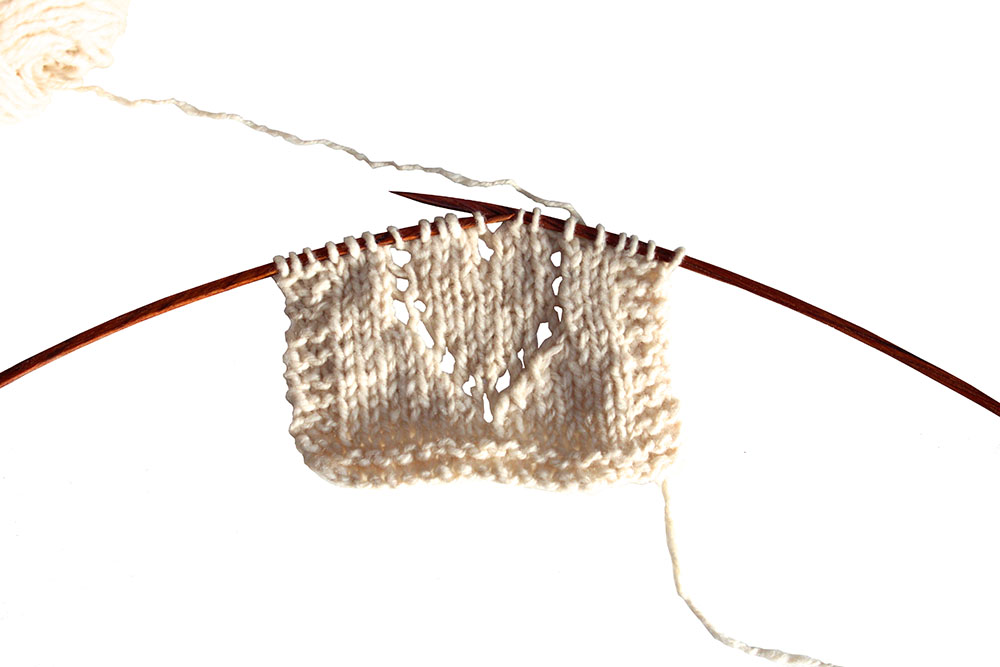
Winter WeavingI did a little winter weaving on my portable loom. It felt good to sit down on a cold, snowy day & play with some of my stash yarns.  This little weaving was inspired by the fresh fallen snow & the Magnolia tree in our backyard.

Winter Pussy Willow

– – – – – – – – – – – – – – – – – – – – – – – – – – – – – – – – – – – – –

This weaving loom can be found in my Etsy shop

TKGA Master Knitters Level 1: Swatches 4-6

7956973104_a65e1ed837_z

When I first received the program in the mail & started reading through it, I felt overwhelmed & unsure about where & how to begin.  If I hadn’t been working through the program with a friend, I would have struggled & probably wouldn’t have enjoyed it much.  Having someone to talk to about the program, & to work together made a big difference for me. There are questions that my friend & I asked each other, & we scoured the internet together for examples from others who have also worked through the program. I want to be that resource for others.  In this series I will describe what skills a knitter needs to know about & helpful resources that can be used in answering the questions. I will  share pictures of my swatches, & the feedback I receive after my swatches have been reviewed. I hope that this series will be a companion for those working through the program.

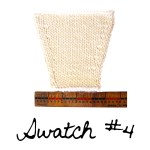
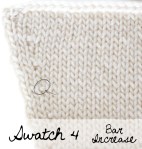
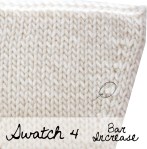
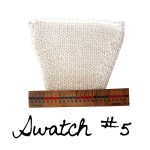
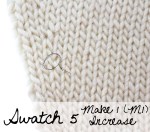
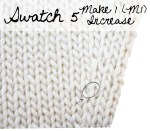
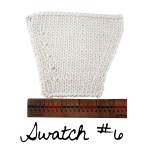
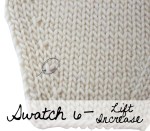
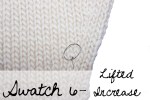
Swatches 4-6 are designed to demonstrate your knowledge of increases.  You will need to know how to increase using bar, lifted/raised, & Make 1 (M1) increases.  Knitty has a great article demonstrating how to make these increases.  You will also need to know how to evenly space increases.

When answering the questions that correspond with these swatches you will find that the following articles are a great resource.

“Evenly Spaced Increases” by Mary Forte. Cast On November 2010-January 2011: 67-69

“Single Increase Savvy” by Binka Schwan. Cast On August-September 2011: 70-71

*These articles are only available to TKGA members.

TKGA Master Knitters Level 1: Swatches 1-3

7956973104_a65e1ed837_zAt the beginning of 2012, I decided that I wanted to test my knitting skills by enrolling in TKGA’s Masters Program for Hand Knitting.  I recruited a friend to join me & in March we both began.  She has finished the first level & passed.  I, on the other hand, have been dragging my feet to get everything I need completed.  I am about 3/4 of the way through, & I really just need to buckle down & finish it.   Maybe by writing about the program here, I will find the motivation that I need.

When I first received the program in the mail & started reading through it, I felt overwhelmed & unsure about where & how to begin.  If I hadn’t been working through the program with a friend, I would have struggled & probably wouldn’t have enjoyed it much.  Having someone to talk to about the program, & to work together made a big difference for me. There are questions that my friend & I asked each other, & we scoured the internet together for examples from others who have also worked through the program. I want to be that resource for others.  In this series I will describe what skills a knitter needs to know about & helpful resources that can be used in answering the questions. I will  share pictures of my swatches, & the feedback I receive after my swatches have been reviewed. I hope that this series will be a companion for those working through the program.

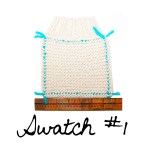
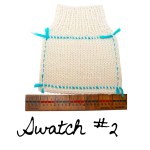
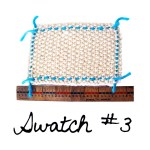
Swatches 1- 3  show that you are familiar with Long Tail Cast On, Garter, Stockinette, Seed Stitch & Ribbing, as well as, binding off in pattern.  You will need to know the difference between the right & wrong sides, be able to determine gauge, maintain consistent tension, & how to correct tensions problems.

*The articles “More Thoughts on Gauge.”  by Binka Schwan, (Cast On May-July 2010: 65-69) & “Tension Problems” by Arenda Holladay, (Cast On Feb-April 2009: 1-3) are 2 helpful resources when answering questions about these first 3 swatches.

*These articles are only available to TKGA members.

Knitting Behind Bars

An article written by Jill Rosen, The Baltimore Sun.

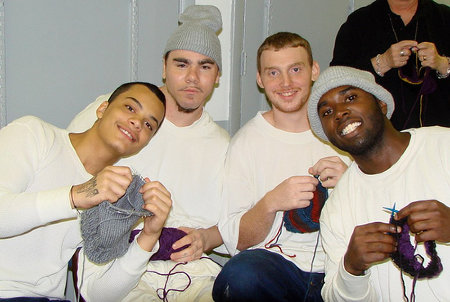
Lynn Zwerling speaks of knitting the way others talk about yoga or long distance running or even particularly potent cocktails. It’s life-changing, she’ll say. Mind-altering. Zen. The Columbia retiree doesn’t care if she’s making a hat, a sweater or a scarf. It’s just the way she loses herself in the lightly clicking needles, plush wool and repetitive motion.

Zwerling, who’s 67, took up knitting after retiring from selling cars, quickly becoming an evangelist, more enthusiastic than skilled. She started a knitting group that swelled to nearly 500 members and then — surprising everyone she knew — announced that she wanted to teach men in jail how to knit.

DSC00037

“I just knew it would work,” she says. “I thought I could give a calming influence to people who really need this. I’m not a social worker. I’m not an educator. But I thought what it takes to do knitting are skills vital to human existence — setting goals, completing a project, giving to somebody else.

“And I thought, maybe when they get back in the world, these men might choose to be calm and do something worthwhile. But I’m a dreamer, you know.”

Defying every expectation, Zwerling’s Thursday night program, Knitting Behind Bars, has become in two years the most exclusive club at Jessup’s Pre-Release Unit, an all-male, minimum-security penitentiary in Howard County.

Men literally beg to get in. There’s a waiting list. And no one’s more surprised about that than the assistant warden who couldn’t help but harrumph when Zwerling told her she wanted to teach inmates how to make stuffed dolls and woolly hats. Every other prison in the area had already turned her down.

“I was like, ‘Mmmm, I don’t know,” says Margaret M. Chippendale, the prison’s warden. “I just had a hard time trying to grasp that an inmate that might have committed a violent crime or been a gang affiliate was going to want to sit in a room and knit.”

But they did. And do.

They want it so much, in fact, that they’re willing to be good in order to do it. Chippendale has noticed lower rates of violence among the men who knit. “It’s a privilege to be in that program,” Chippendale says. “It’s something that matters and they don’t want to do anything to be removed from it.”

On a recent Thursday, George Hopkins hunched in a chair, grimacing in concentration, pushing a needle through a loop of wool, wrapping it with yarn, then deftly tucking it under, through and around — again and again, over and over.

The 54-year-old from Baltimore, in prison for stabbing someone, had settled into a knitting-induced reverie. He was halfway into a hat and, just as Zwerling suspected, entirely transported.

“My mind is on something soft and gentle,” he said. “My mind is nowhere near inside these walls.”

That first night at the prison, Zwerling went alone. A grandmotherly figure who cuts her graying hair short and who likes to wear her own brightly colored creations, Zwerling stepped through the metal detector, held her arms out for a pat down and endured disapproval over her underwire brassiere. She says she wasn’t scared, not even for a minute.

“We were very naive,” says Sheila Rovelstad, a 61-year-old avid knitter who joined Zwerling at the jail not long after that first class. “At first we didn’t know enough to be afraid.”

They thought the guys were fundamentally good fellows who perhaps made “some bad choices.” But soon enough they realized that these were men who had beaten people, written bad checks for thousands of dollars, and in one case, kept someone locked in a room. One was a child abuser. “That one was hard,” Rovelstad says.

“They are criminals,” she says. “Most have hurt someone in some way. These are not good boys. But we’ve become fond of them.”

Both women will tell you they know boys. They raised their own. Zwerling’s sons are 31 and 34. Rovelstad’s son died in 1999 in an accident while he was attending Florida State University.

“We understand how easy it is go astray. It isn’t that we had bad boys,” Zwerling says. “But we had boys.”

In the bare, plain classroom that’s become the knitting room at the prison, the women lay down firm ground rules. No roughhousing. No coarse language. No prison nicknames. “Bring your best selves,” they say.

If one of the men steps out of line, Rovelstad finds herself telling him, “We don’t do that in this family.” It’s the same thing she’d tell her own kids.

For the sessions that run two hours every Thursday evening, the men do seem to bring their best selves. They shower. They put on clean clothes. When they walk in, they peel off their skull caps and greet the women respectfully. Before they leave, they’ll call out things like, “Drive safely” and “Have a great week.”

During an inmate’s first class, Zwerling, Rovelstad and a third volunteer will help him make a little swatch — nothing more than a few stitches worked back and forth. But before that new knitter leaves, the women will have him cut the yarn, taking care to leave a long tail. They’ll tell him to carry the square in his pocket and if he gets upset, to pull the tail.

That first class wasn’t easy for Raymond Furman, a 46-year-old from Washington who’s serving a sentence for telephone misuse and stalking. Frustrated and unable to do more than a stitch or two without a mistake, he threw down his work and said, “I can’t do this.” But, he remembers, one of the women said, “Just relax. Let the yarn have its way.”

Knitting is a Love Language

When my husband & I were getting married, we read Gary Chapman’s book The 5 Love Languages.  We were young and the wisdom we gained from reading this together was priceless.  As the title implies, the book explains that there are 5 love languages.  They are words of affirmation, quality time, receiving gifts, acts of service, and physical touch.  However, I believe that there is a sixth love language, KNITTING!

IMG_0122Ask any knitter/crocheter how many items they have created for themselves, and they will most likely give a modest number of items.  I  have made 4 thing for myself.  Now, ask a knitter/crocheter how many items they have made for other people and you likely hear a much larger number.  I can’t even tell you how many things I’ve knitted for other people.  I stopped counting a long time ago.  Why is this? Because, knitting is a love language!

Now, according to Gary Chapman, my love language falls under acts of service & gift giving.  So, when I want to express my love and appreciation for someone, my most natural response is to knit something for them.  As I spend my time crafting each stitch, my heart & mind are pulled toward that person.  I pray for health and I pray for safety.  I pray for blessing and joy.  The piece I create becomes my prayer and it is my gift to the one I love.

What is your love language?

KAL :: Kvosin

I have never done a KAL before, but it is something that I’ve been thinking of doing.  I saw that Stephen West is launching a series of new patterns with KAL & thought I’d join in the fun.

8419229872_2e2c785891

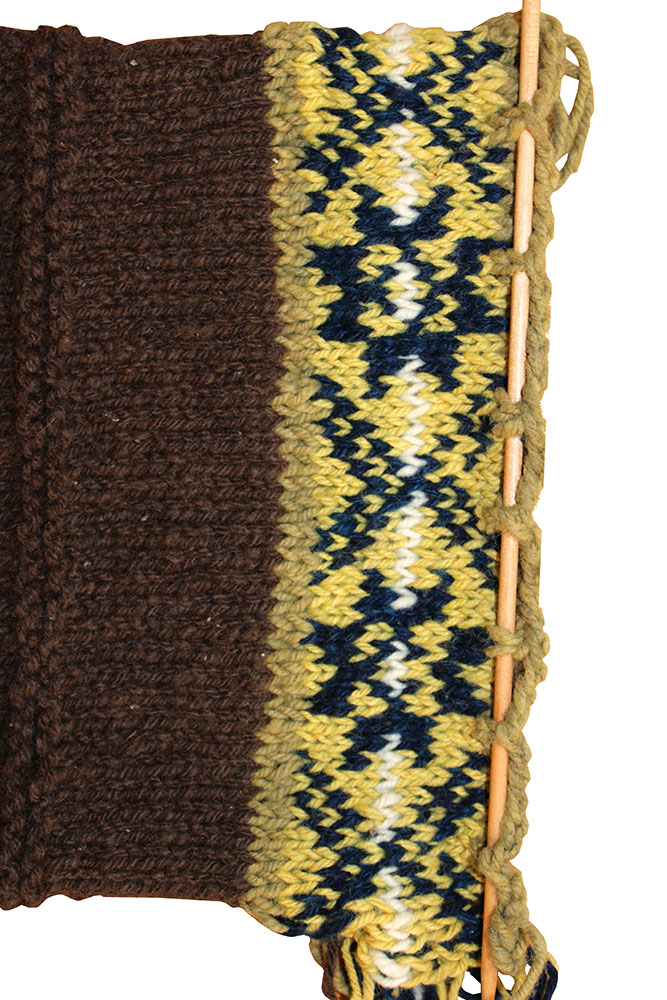
The first KAL begins on Friday 2/8/13 & will be the Kvosin hat. With poor old winter knocking at my door, I decided that I needed to make myself a new warmer hat. This will be just the one. I love the combination of texture & colors.  I also love that it is constructed sideways.  I’ve always knitted hats in the round, & I love having the opportunity to break out of that box!

8417333387_ccdaf3f08a_z

yarns

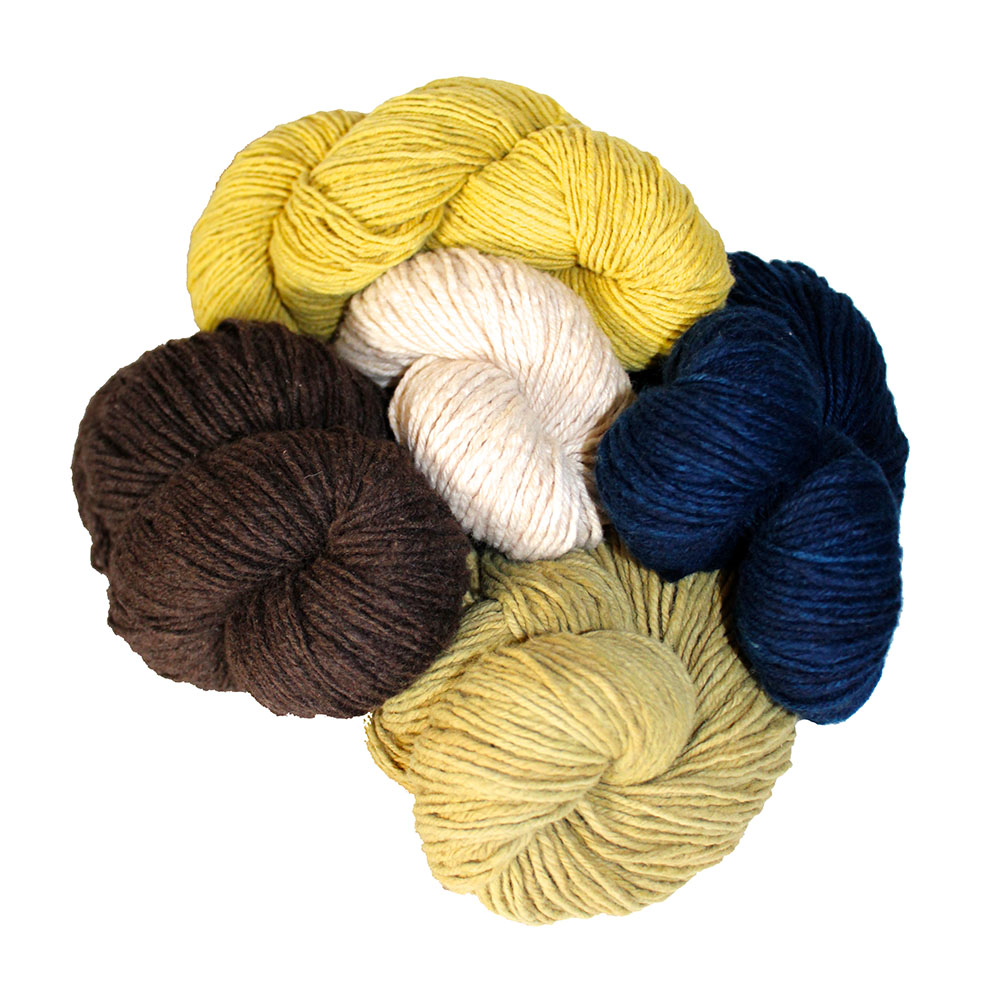
I’ve chosen my yarn for the project.  I’m going to be using The Rocking Yak’s 100% Yak Down yarns in natural brown, cream, indigo, plant dyed yellow, & plant dyed green.  I can’t wait to get started.  Let me know if you decide to join us!

One Stitch At A Time

Image 1

 Today’s post was written by guest blogger, Lise Solvang of aHandKnitLife

I asked her to share with us about her Knitting in Recovery program, One Stitch at a Time.

[]::[]::[]::[]::[]::[]::[]::[]

“Patterns”…what an appropriate place for me to start on this part of my own

healing journey.  It’s the name of the recovery home for women who struggle with the addiction to alcohol and drugs where I am arriving to lead a knitting circle.

Still very new to recovery myself, I am anxious, yet hopeful and proud, to be amongst these women who suffer from the same disease that I do.  To any outsider, we would seem very different, at least in appearance, attitude and speech, but the reality is that we are not.  We are each trying to live with the same patterns of substance abuse.  It is only the physical places this disease has taken us that might be poles apart.

After years of wanting to be done with the knitting part of my life…the part that drinking put to ruins…my familiar needles are in my hands again.  These same needles that brought up the painful feelings of shame and guilt I lived with in secrecy and isolation for so long, were now going to become a significant part of my own healing.

I hand them out in pairs to each woman all circular knitting needles, to Bella, who is excited and curious and can’t wait to have something to “busy” her so she can stop smoking…Laurie because she had to be there, Stephanie who knew a little, and then to Susan, who wouldn’t accept them that first day, saying, “Don’t put any needles in my hands, I’m afraid of what I could with them.”  I’ve never thought of knitting needles as a potential weapon before, but this is a new place for me to teach and I am here to learn too.  I bring my chair down to join them in a circle, a significant step towards being ONE and the same.
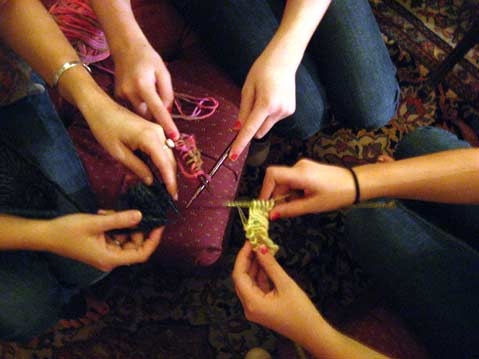
Image 4

Knitting happens to be one of very few things that is best learned one-on-one in person.  I interweave my hands with Bella’s, to guide her into a timeless motion that is to be repeated hundreds, thousands, hopefully millions of times into the future.  I literally hold her hand through the struggle and fight of “getting it right” as we so repeatedly do in life.

I find that a “No Rules “ approach to knitting has a welcoming and sometimes humorous effect.  No stigma is attached, no fear of failure, conquering something new becomes easier, a sense of empowerment replaces.

As in life, there are a few basics that need to be followed, other than that, leave it open to interpret and apply in your own way.  There are no mistakes in knitting, only “design elements.”  Dropped a stitch?…drop another one…that just means you’ve created your own unique pattern.

We’re starting simple, knitting hats and purses in the round. It astounds us all that one simple knit stitch can create such a vast variety of designs and beauty.  Bella starts out well, then drops some stitches, adds some stitches, perfect again, then continues with a different yarn.  She’s knitting her life, she says, going through some tough times, experiencing joy, a door opening towards something brand new.  Not wanting to change or “correct” a single stitch, she comes to love her purse and love her life exactly the way it is enfolding.

Laura finds herself unraveling her hat every Tuesday at five o’clock before I get there at six, to start anew.  This is where knitting differs from life, you can go back and “correct mistakes.”  Over the weeks though she is able to recognize that progress, not perfection is the key, and can finally see the beauty in all the design elements, not mistakes, made.

During these months of sitting together knitting, a deep sense of belonging arises.  A close-knit community is formed from the heartfelt conversation.  Stories bring laughter and joy one day, tears and shared frustrations another.  And sometimes the stillness and peace that follows comes to replace the rush and push of our everyday routines.  Focused on the craft at hand, we open up in our own way, raw and honest, yet somehow safe…together.

The holiness of handwork aids in the opening of the heart chakra.  So used to priding ourselves on our self-sufficiency, we normally cut ourselves off from this shared source of abundant wisdom and help that others are willing to give us.  Here, the communal circle allows us to do our own heart work, the work of healing our selves and each other.  This state of openness transcends our own ego boundaries as it allows us to stay out of our judging minds, even for a little while as we create something that is our own.

Weeks and weeks go by before Susan finally trusts herself enough to pick up knitting needles.  With the support and faith of every woman around her she knits a hat for her husband, even weaving in a strand of her own hair, an old Norwegian tradition to ensure everlasting love.  I don’t think I have ever seen a happier and more proud woman, skipping her way towards the rest of her life.  Then their mandatory session is over and I have to let it go, trusting that I have played some small part in a bigger pattern of creation.

Stephanie contacts me months later to let express her gratitude for the way knitting continues to open up new possibilities for her, “Knitting to me is a way of experiencing my own life. Early in my recovery process, when I first started back knitting, I would unravel and start all over if I didn’t get a stitch correct or if it didn’t “look right.”  Eventually I saw that this was the way I approached my life. I was always reaching for perfection and if it didn’t come, I ended up going back and starting over (with the starting over looking like relapse and going back into rehab). It wasn’t until I saw this in my knitting and decided, actually decided, to make whatever came and appreciate the beauty of it, “mistakes” and all that I was able to move forward in my own recovery…in my own life. Knitting helped me to see that whatever I make is beautiful as long as I make it with joy and abandon with the gift that was given to me by the Creator’s hand.”
Image

Stephanie is tapping into the recipe for human contentment and happiness.  I’ve begun to research in an attempt to understand the inexplicable, and discover that there are three connected elements that make for happiness:

  1. A creative endeavor that you find exhilarating and you absorb yourself in.
  2. This endeavor produces something
  3. The end product of creative endeavor provides a service for someone else.

All I know is that, today, when I’m knitting there is nowhere else I’d rather be and nothing else I’d rather be doing.  Today I get to be a proud, happy and sober woman.  I find the peace of mind necessary to see clearly the miracle of my own existence in this moment, and the preciousness of those I love.  I see the goodness found in daily life and the many, many ways my life is graced.

I knit to meditate, to quiet myself, to reach transcendence, to create art, to play, to touch, to heal.

Stitch by stitch and moment by moment, we create the fabric of our lives and the pattern that is to become us.